Minutes matter before a plume becomes a fire
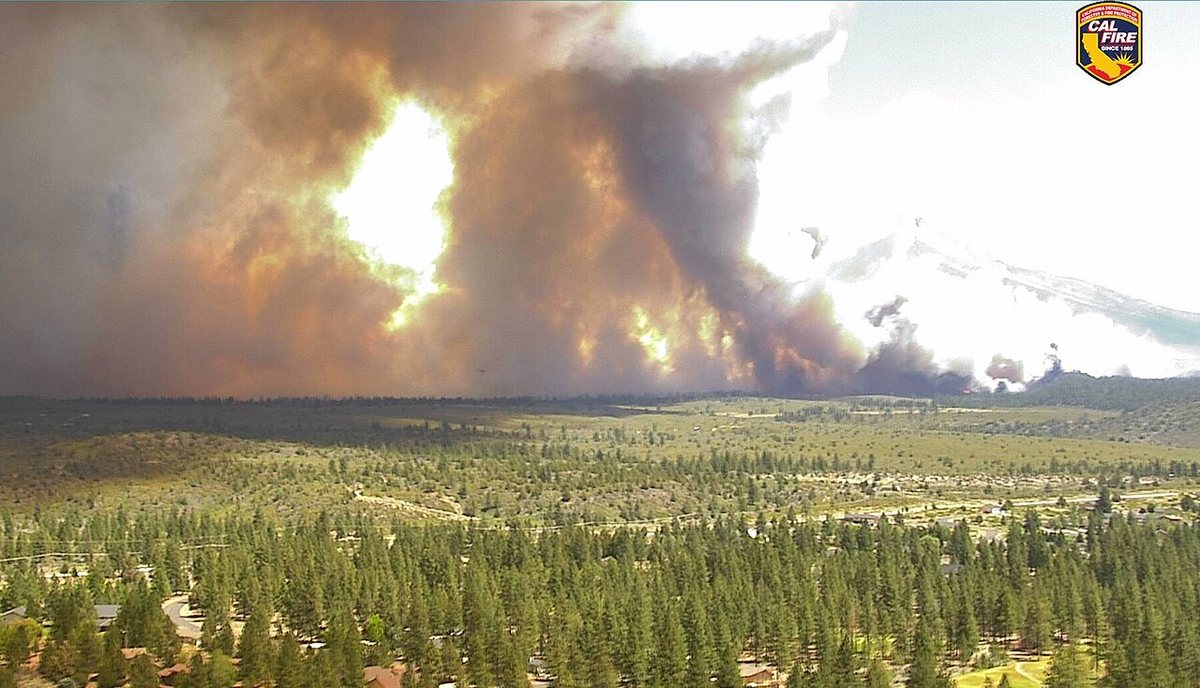
A CAL FIRE remote wildfire camera capturing a smoke plume rising over Northern California timberland.
Photo: CAL FIRE / State of California (Public Domain), via Wikimedia Commons.
A wildfire is easiest to stop in its first minutes, and the first minutes are when it is hardest to see. A plume can rise off a backcountry ridgeline with no one close enough to report it, and every minute it goes unreported, the fire gets harder to stop. CAL FIRE wanted to catch it early, wherever it starts.
| Difference | Cameras with AI (CAL FIRE) | Waiting for a 911 call |
|---|---|---|
| Who notices first | A camera that never looks away | A passerby who happens to see smoke |
| Where it works | Mountaintops and remote terrain with few witnesses | Places where someone is nearby with a signal |
| What follows | Trained staff confirm the flagged smoke | A dispatcher works out where the fire is |
UC San Diego’s ALERTCalifornia program runs the cameras. The network has grown to 1,263 camera sensors, piping alerts and live imagery into all 21 CAL FIRE command centers.[1] California switched on AI detection across the images of more than 1,100 cameras statewide in 2023, the U.S. Government Accountability Office (GAO) recorded in 2025.[2]
From a camera frame to a confirmed alert
The feeds never stop. The AI scans the footage, draws a red box around anything that looks like smoke and stamps it with a percentage of certainty. Then a trained person watching the same feed decides whether it’s real. Nobody acts until they do.[3]
-
Cameras watch around the clock Always on
Mountaintop sensors push imagery to the program’s servers day and night. Nobody has to be looking.
-
The AI boxes suspected smoke Detection
Models trained on past smoke events box the suspect patch and score how sure they are.
-
Trained staff confirm Human check
A staffer pulls up the footage and makes the call: real fire or false alarm.
-
The command center responds Dispatch
The confirmed alert lands at the CAL FIRE command center covering that ground, and it sends the response.
No camera rolls an engine or launches a helicopter or aircraft by itself. It sends a message, and people at the dispatch center verify it.[4]
Detections that arrive ahead of the phone call
Three hundred and seventy times in 2024, a camera told CAL FIRE about a fire before anyone in the public had reported it. The network processed 1,668 AI detections that year, according to CAL FIRE’s Director’s Report to the Board of Forestry (March 2025).[5]
In 2024 the cameras logged 1,668 detections against roughly 7,550 fires in the state responsibility area. That’s about one for every four or five fires.
1,668 AI detections processed in 2024 · CAL FIRE Director’s Report to the Board of Forestry (Mar 2025)A later CAL FIRE count, quoted in mid-2025, measured it another way: 636 of the 2024 detections arrived before a dispatch record had even been created.[6] In 2025 the network helped inform work on about 3,600 incidents, and in more than half of them it alerted state fire officials before any 911 caller did.[1]
One shared view for every command center
“A game changer” is how Phillip SeLegue, CAL FIRE’s staff chief for fire intelligence, describes the tool.[7] Neal Driscoll, who directs ALERTCalifornia at UC San Diego, wants crews on fires “in the incipient phase before they get too large.”[1] In 2024 the detection tool took a statewide networking innovation award.[8]
What peer teams can copy
Four moves for wildfire, dispatch and emergency-management teams putting AI behind their cameras.
Phase 1 · See and Confirm
-
Put cameras where witnesses are scarce
AI & Workflow DesignStart on the ridgelines and remote terrain, where a plume can burn a long time before anyone picks up a phone.
-
Let AI flag, and let people confirm
OperationsA trained person looks at every flagged frame before it goes anywhere. Crews roll to confirmed fires, and the AI keeps learning from each call staff make.
Phase 2 · Route and Share
-
Send the confirmed alert to the center that will act
OperationsWire the detection feed straight to the command center covering that ground. Attach the imagery, so dispatchers see exactly what the camera saw.
-
Share the view with partners
OperationsOpen camera sites and equipment to utilities and neighboring agencies. One network can serve every responder in the region.
Footnotes & Sources
- Route Fifty — What California has learned from an AI-enabled early wildfire detection system (1 Jul 2026)
- U.S. Government Accountability Office — Science & Tech Spotlight: Wildfire Detection Technologies, GAO-25-108161 (1 May 2025)
- Route Fifty / GovExec — As wildfires burn throughout the West, officials are turning to AI (17 Sep 2024)
- FireRescue1 / TNS — Over 1,000 AI cameras help spot Calif. wildfires before the first 911 call (19 Sep 2025)
- CAL FIRE — Director’s Report to the Board of Forestry and Fire Protection (March 2025)
- Santa Barbara Independent — AI Cameras Catch Fires Early (16 Jul 2025)
- CBS Sacramento — Cal Fire scores successes using A.I. to spot wildfires (23 Sep 2023)
- UC San Diego Qualcomm Institute — AI Fire-Detection Tool Honored with “Innovations in Networking” Award by CENIC (14 Mar 2024)
- Washington State Department of Natural Resources — Public access feed for DNR wildfire detection cameras (14 Jul 2025)
- KOB 4 — New Mexico enlists AI to fight wildfires